
 Română
  Deutsch
  English
  Türkçe
  العربية
  فارسی
فارسی  Русский
 MiMi-Zentrum für Integration in Bayern
Ethno-Medizinisches Zentrum e.V.
Zenettiplatz 1 | 80337 München
Telefon: 089 52035959


Organ donations follow a fixed, medical process. Respect for the deceased and their loved ones is paramount.
‘Brain death’ is a prerequisite for organ donation. This condition is caused, for example, by severe bleeds in the brain, an accident, or a massive lack of oxygen supply to the brain.
Brain death marks the time of death in medical as well as legal terms. Two medical specialists independently determine that a person has suffered brain death. They confirm that the brain has irretrievably lost all its functions.
After brain death, a person can no longer breathe on their own. Machines artificially maintain breathing and circulation. Medications support this intervention. Without these measures, organs would no longer be supplied with oxygen. Circulation and organ activity would come to a standstill. However, supplying the organs with oxygen is a prerequisite for their subsequent use in transplantation.
After death has been determined, specialists check whether the deceased person has consented to organ donation. It’s best if this is documented in the organ donation register, on an organ donor card or in an Advance Care Directive. If there is no written decision, the next of kin decide according to the presumed wishes of the deceased.
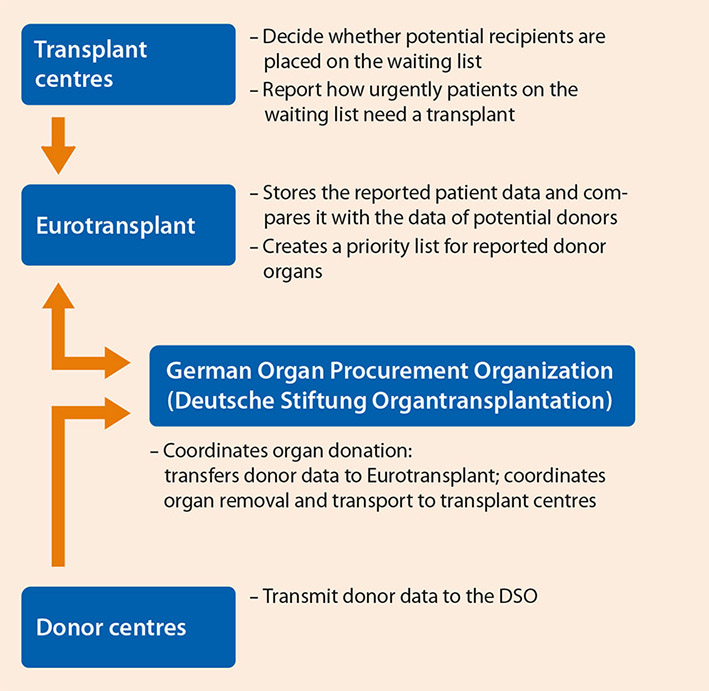 Figure 1 Sequence for potential organ donationIf there is consent, the German Organ Procurement Organization (Deutsche Stiftung Organtransplantation, DSO) will initiate the next steps. Professionals examine the organs for blood type and tissue properties, as well as for possible infections or tumour diseases.
The DSO then reports the available organs to Eurotransplant. Eurotransplant decides which patients on the waiting list are best placed to receive the transplants.
Specialised surgical teams remove the organs with the utmost care. Artificial ventilation and circulatory support end when the organs have been removed. The organs are then preserved. To ensure the organs remain viable, specialist personnel transport them to the respective transplant centres as quickly as possible. Finally, the body of the deceased person is prepared with dignity for a normal burial.
On request, loved ones can obtain information about the success of the organ transplants later. However, the recipients remain anonymous.
MiMi-Zentrum für Integration in Bayern
Ethno-Medizinisches Zentrum e.V.
Zenettiplatz 1 | 80337 München
Telefon: 089 52035959